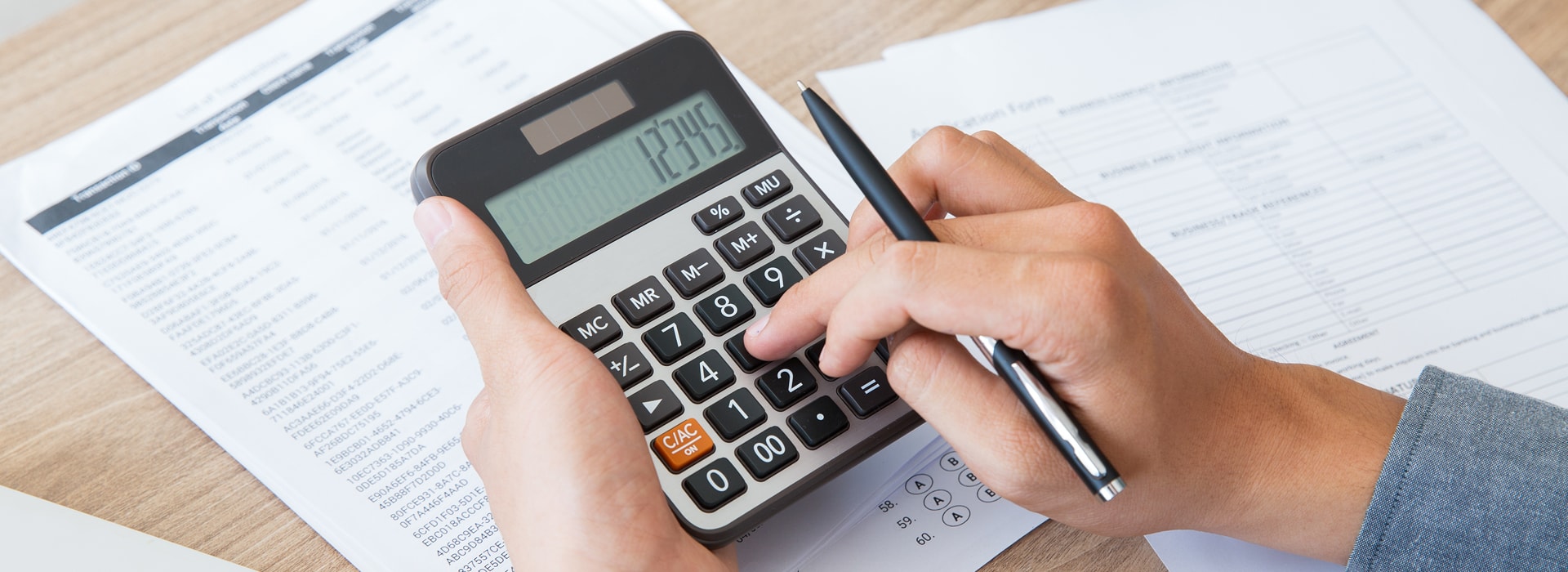
Business valuation methods – Find out exactly what a business is worth!
Putting an exact price on a business can be extremely important, whether you are on the lookout for a purchase or looking to sell your company. Fortunately for you, we have already designed a specialist guide to valuing businesses…
Business valuation methods –
What you think the business is worth and what someone else looking to buy or sell thinks it is worth are often far apart in value. When we talk about how much a business is worth, we are essentially talking about how much profit it makes and its future potential, as well as considering any risks involved. The key factors to measuring value are asset value, past cash flow, and profitability. Although business relationships and goodwill account for a hefty chunk of the business value total, they are very hard to measure.
Business viability and what can affect it –
Business value is affected by these three main things:
- Sale circumstance
- assets (tangible compared to intangible)
- how long the company has been in business
The sale and why it is happening –
One of the most important things to ask yourself is, ‘why are they selling?’ The reason behind a sale can greatly impact the value. For example, if someone is being forced to sell, the business value will drop.
Tangible and intangible assets –
Some prime examples of tangible assets are things such as machinery, stock, or property. These can be sold and, therefore, make the business easier to value. However, few companies have any tangible assets beyond equipment. However, intangible assets, such as brand image, customer loyalty, potential, and intellectual property can have a lot of value, even if they are harder to calculate.
How long they have been in business –
If a business has been operational for a good number of years, retaining a good track record during that time, the value can increase. Always be suspicious of those looking to sell after trading for a short period of time.
Business valuation methods – The true value
A business is only worth what someone will pay for it. Therefore, buyers will work out how much the company is worth to them and them alone. For example, a business that has lots of existing relationships but turns no profits may be worth very little to someone looking to take it over. However, to a company already operating within the same industry, those contacts may be worth a lot if they purchase and merge the companies.
Therefore, buyers use a range of different business valuation methods:
Asset valuation
Our business valuation services consist of adding up assets and taking away any liabilities. For example, if a business has tangible assets that add up to around $200,000, but owe $25,000 in invoices, its total asset value would be $175,000. Of course, that is a simplified example of a real-life situation. However, buyers can also purchase the assets alone, meaning that outstanding invoices, debts, and taxes are still payable by the original owner.
Net Book Value or NBV is the collection of assets listed in the business accounts. This is calculated as a part of our business valuation services and can be updated with regards to economic reality if assets change in value.
Price earnings ratio
Also known as the P/E Ratio, this is the total business value divided by the total post-tax profits. One business valuation method involves the equation: Value = Earnings after tax × P/E ratio. The difficult part is choosing a ratio to use and justifying that choice to buyers/sellers. Fortunately, many industries have a standard value to use.
Entry cost valuation
You can also start a similar business from scratch rather than buying an existing one. The entry cost is essentially how much it would cost you to do this. In order to calculate such a valuation, you can work out the financing of existing business assets, developing products/services, recruiting staff, and building a loyal pool of customers. For example, you may work out that it costs $100,000 for all the equipment, $20,000 to train staff, $50,000 of extra overheads per month, and a time period of six months to build a pool of customers. Any company that already had all of the above would be worth a minimum of $720,000.
Important issues –
The thing that really gives a business value cannot always be measured using simple methods. For example, intangible assets are notoriously hard to value. Therefore, it is important to use a professional valuation expert such as GANTPMV to ensure that you receive an accurate valuation.
Existing relationships –
One prime example of something that can add a lot of value but is hard to put a number on is existing relationships. For example, if a business has the rights to sell a product or service that has high potential.
Management stability
The senior management situation within a business can have a profound impact on the overall valuation. For example, if the current management is doing a good job and is committed to staying put, the value is retained. If they are leaving, the value may drop due to the uncertainty. When a key person leaves, there are always question marks over how much value leaves with them. In a sales-based industry, if a top salesperson leaves, they may take customers with them, having a huge knock-on effect on company value. Therefore, contracts, agreements, and incentives designed to retain top performers can add value to a business. On the other hand, if a new owner wants a new team, then these very same things can decrease value.
Intellectual property ownership
Intellectual property can be extremely valuable, although hard to put a figure on when compared to physical assets. For example, trademarks and patents can add lots of value to a business if they correspond to high-performing products/services. If one business has a high-performing patented product, it may be worth more than a business with a similar but unpatented product.
Talk to GANTPMV about valuing your business. Contact Us
GANTPMV write regular articles based around business valuations such as Plant and Machinery Valuations in 2020 and 2021 Visit our News Page GantPMV News
for more informative articles.
Any queries on
Plant and Machinery Valuation and Advisory
Property & Family Law Valuations Services
Financial and Taxation Valuations Services
Acquisition and Compensation Valuations
High End Rural Infrastructure Assessments
Market and Economic Research Services
Trusted Depreciation Schedule Services
Plant and Machinery Lease Reviews Services
please do not hesitate to call myself. My details are below:-
LINCOLN GANTER AAPI ASA {MTS} CPV
Owner and Director
GANTPMV Pty Ltd
Email: lincoln@gantpmv.com.au
Mobile: 0413 628 840
Contact Us: HERE